Inca Trail
- What you need to know
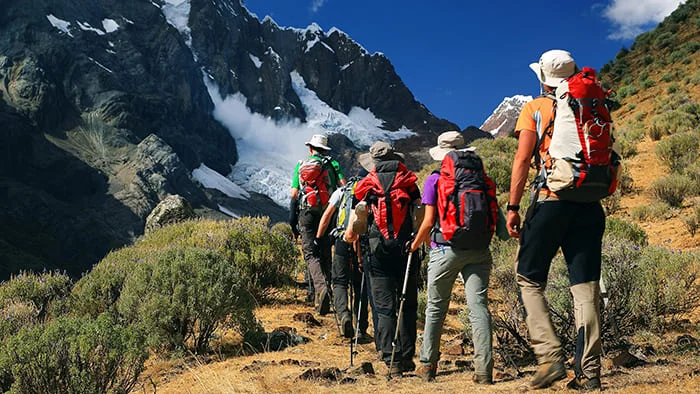
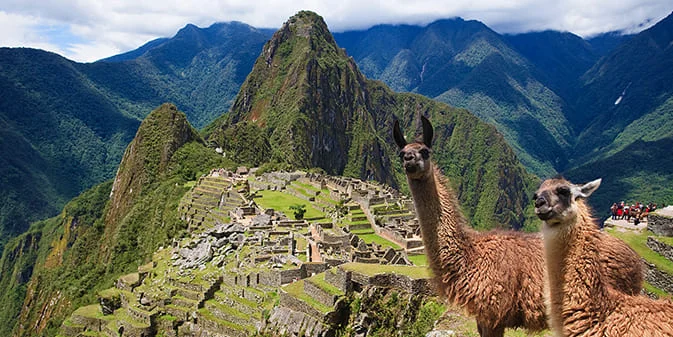
Without a doubt, the Inca Trail is one of the best known and most valued Treks in the world of
hiking, it is for this reason that through Supreme Decree No. 001-81-AA dated January 8, 1981,
the Historic Sanctuary of Machu was established. Picchu as a Natural Protected Area by the
State, which implies an arduous control within the road for its conservation. Compared to other
treks in Peru, the Inca Trail is the only trail in which you have to reserve your entrance in
advance and also make a deposit of money to state accounts, said money will be used to be able
to maintain the route, payment to administrative staff, park rangers, etc.
In 2016, in report No. 727-2016-SERNANP-DGANP and 366-2016-OAJ dated December 5 and 17, 2016,
through which the Directorate for the Management of Natural Protected Areas and the Legal
Department of the Service National Protected Natural Areas by the state, respectively, recommend
the approval of the Regulation for sustainable tourist use of the Network of Inca Trails of the
Historic Sanctuary of Machu Picchu.
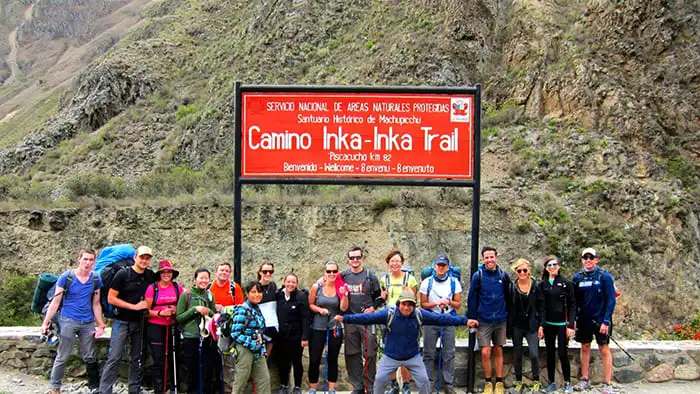
The purpose of the Inca Trail regulations:
- 1.- Protect and conserve the cultural and natural heritage of the Inca trail network of the
Historic Sanctuary of Machu Picchu.
- 2.- Promote the sustainable use of the cultural and natural landscape of the network of
Inca trails of the Historic Sanctuary of Machu Picchu, in accordance with current
legislation on conservation and development of tourist activity.
- 3.- Prevent, mitigate, reduce and/or control possible impacts on the cultural and natural
heritage resulting from the use of the Inca Trail Network of the Historic Sanctuary of Machu
Picchu.
- 4.- Promote the commitment of users to the conservation of the cultural and natural
heritage of the Inca Trail Network of the Historic Sanctuary of Machu Picchu.
- 5.- Disseminate codes of conduct and ethical standards for responsible tourism activity to
contribute to the conservation of users of the Inca Trail Network of the Historic Sanctuary
of Machu Picchu.
- 6.- Promote the development, implementation and proper use of the infrastructure services
of the Inca Trail Network of the Historic Sanctuary of Machu Picchu.
- 7.- Commit the participation of the competent entities and the actors involved to improve
the management and provide an adequate provision of tourist services of the Inca Trail
Network of the Historic Sanctuary of Machu Picchu.
- 8.- Promote prevention actions as part of the risk management contingency plans of the
Historic Sanctuary of Machu Picchu.
- 9.- Promote and coordinate the training of professional and technical personnel of the
competent entities, support personnel, local population and involved actors that provide
services on the Inca Trail Network.
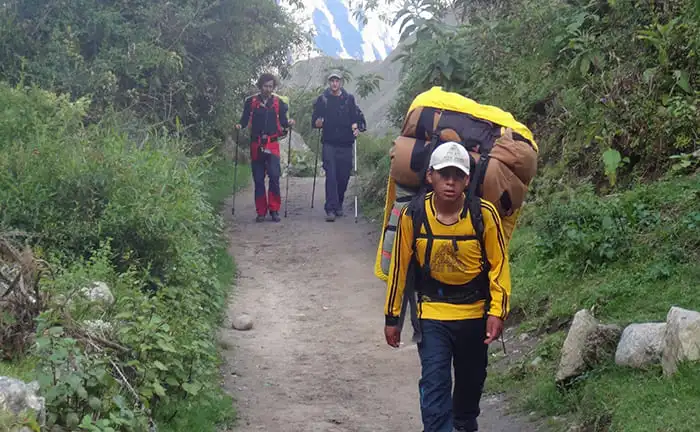
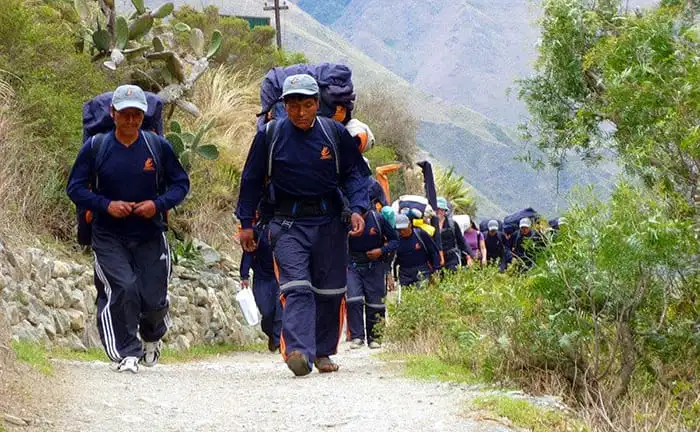
Along the way we will also find the porters working, who are people who
dedicated to transporting luggage, belongings, food, among other articles of personal use that
They are carried by tourists and expedition members of the Inca Trail.
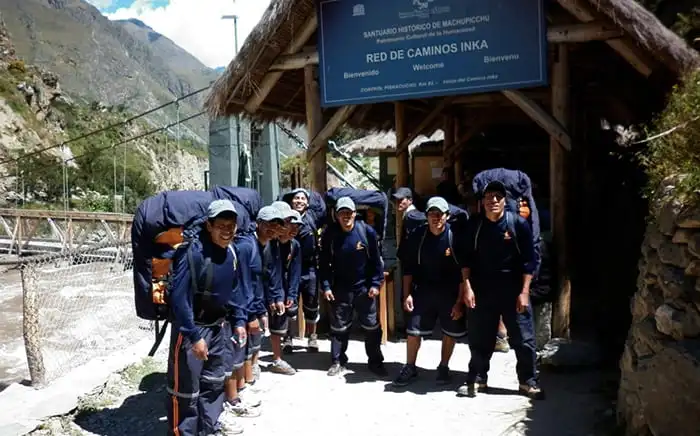
Before the creation
of the regulation
labor protection of porters, these were exploited by travel agencies,
forcing these people to carry between 40 to 50 kilos per day, in the same way they are not
included provisions for their food on the way, for this reason many porters suffered from
future health problems.
Nowadays the porters also have their regulations within the Inca trail, being the most
the following are important:
- The maximum load weight per carrier is 20 kilos and the minimum remuneration for 4
days of work is equivalent to 1.2% of an ITU.
- The operating agencies must provide clothing and footwear for the porters and life
insurance.
- The institution in charge of enforcing all this is SUNAFIL (Superintendence of
National Labor Audit).
DESCRIPTION OF THE INCA TRAIL
- The road consists of 42 kilometers, starting from the town of Piscacucho, also known as
like the km 82 that counts the railway line that goes from Cusco to the Hydroelectric, this
adventure
begins the first day through the towns of Mescay, Tarayoc, Hatunchaca and
finally
Huayllabamaba, the second day through the camps of Yuncachimpa, Ayapata,
Llulluchapamapa, the pass of warmihuañusca (4215m.a.s.l.) and Pacaymayo.
The
third day
archaeological sites of Runkuracay and Sayacmarca, the chaquicocha camp and
Phuyupatamarca to finally finish by the agricultural terraces of intipata and rest
in the last Wiñayhuayna camp.
The fourth and last day to the door of
the sun
or intipuku and finish the tour in the historic sanctuary of Machu Picchu.
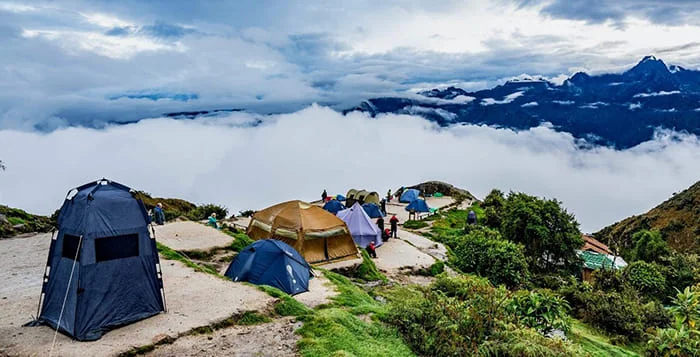
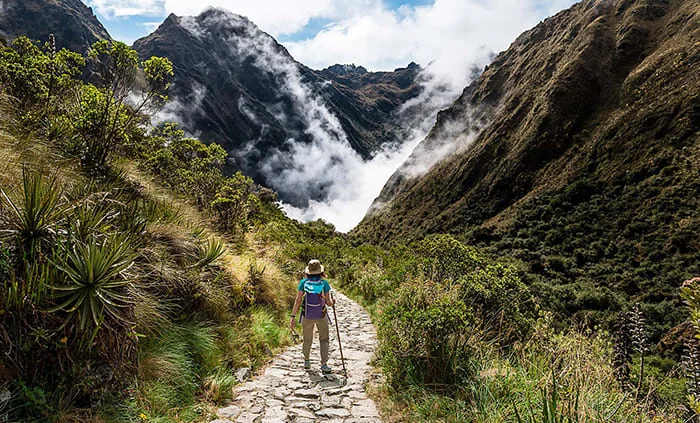
- The difficulty of the path is moderate – difficult , the highest point is
4215 m.a.s.l. and the lowest point is the Wiñayhuayna camp 2600 m.a.s.l., the temperature is
varied every day, the first day the thermal sensation during the day is
between 20° to 25°
C. and at night between 10° to 12° C, the second day during the day between
10° to 20° C
during the day and at night between 5° to 8°C, the third day is more
tropical and humid, the
temperature ranges between 22° to 28°C.

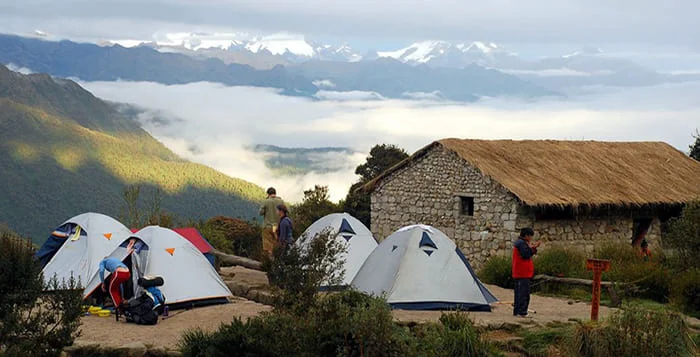
- During the year, there are two well-marked seasons; from April to October the dry season
and
from November to March the rainy season. In any case, as in all treks the weather is very
changeable, do not be surprised if it rains in the dry season, so it is advisable to be
ready to have four seasons in a single day.
Share